


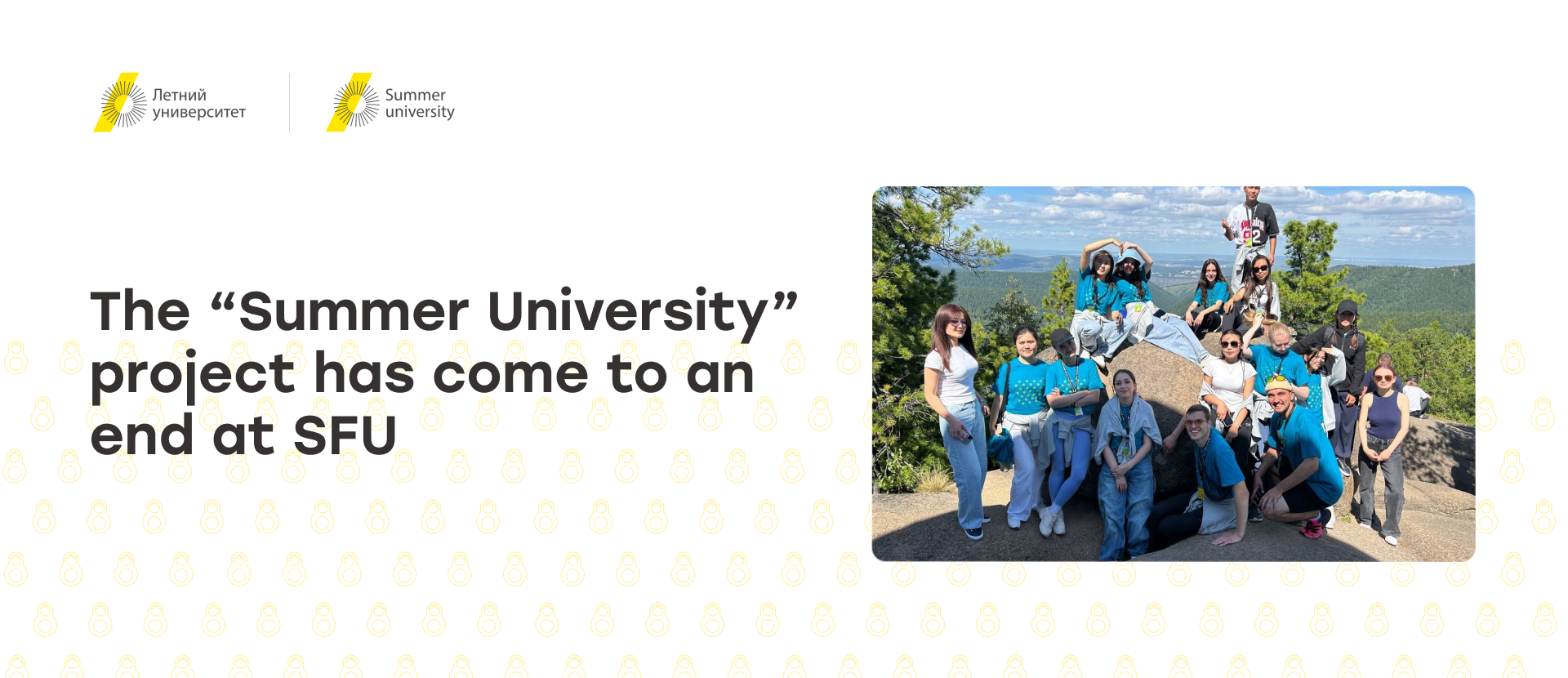
The participants underwent intensive training that included interactive lectures, discussions of progressive business projects aligned with sustainable development concepts, and meetings with leading Russian speakers and practicing entrepreneurs. Special attention in the program was given to the development of creativity, teamwork, and intercultural dialogue.
According to Yevgenia Ershova, the program curator at SFU:
"The main objectives of the project were to develop creative thinking, communication skills, and teamwork abilities. A special emphasis was placed on intercultural exchange and the integration of knowledge in the context of global challenges. These were not just standard lectures but also online forums with foreign professors, incorporating elements of learning in new formats—live broadcasts, discussions—which helped bring the intended format to life: workshops, digital services, webinars, expert recommendations, crisis IT solutions, analytics, and more. We received a lot of gratitude from the participants—the chosen format, as they say, was a hit. The young people gained the maximum possible knowledge and, I hope, positive emotions from the university and Siberia."
Participants Enthusiastically Share Their Impressions
Abbud Abdalla Hassan (Egypt):
"I have been studying Russian for three years. This year, I participated in the 'Summer University' program because it is a great opportunity not only to meet students from different countries but also to be among wonderful teachers and gain new experiences."
Pham Han Vu Tuk (Vietnam):
"I hoped to learn about digital technologies and the cultures of all countries. But in the end, I got something even greater. I met friends from all over the world. Here, I was taught things I didn’t know before. The nature and history amazed me. When I return to Vietnam, I will tell my friends about Krasnoyarsk and the 'Summer University—2025.'"
Li Yang (China):
"I chose SFU because Krasnoyarsk is the most beautiful, the coldest city, and I know that the Yenisei River flows here. I have visited many Russian cities, but I wanted to come to Krasnoyarsk. And I would like to express my gratitude to SFU for the opportunity to participate in the 'Summer University.' And thank you to all the volunteers for their support and care. Thank you very much!"
Industry Tours Leave a Strong Impression
The participants were particularly impressed by the industry excursions. A visit to Krastsvetmet—the world's largest producer of precious metals—allowed students to see modern metallurgical processes and innovations in the industry. Equally significant was the trip to the Krasnoyarsk Hydroelectric Power Station, one of Russia's largest hydroelectric plants.
The cultural program included visits to Gremyachaya Griva Ecopark, Krasnoyarsk Stolby National Park, and the Torgashinsky Stairs—the longest in the region. These trips not only helped them learn more about Siberia but also strengthened team spirit.
"It was incredible! I’ve never seen anything like it. The rocks are mesmerizing, and the nature here is simply stunning. I really enjoyed the hike," shared one of the participants.
A special place in the program was given to the tour of the historical Assumption Cathedral complex.
"The Assumption Cathedral is not just a church—it’s a true work of art. I learned a lot about the city’s spiritual life and felt the atmosphere of spiritual beauty," shared a participant of the "Summer University" project.
Organizers and Project Growth
The project in the region was organized by the Institute of Business Process Management at SFU. The educational and organizational work also involved the Institute of Non-Ferrous Metals, the Humanities Institute, the Institute of Philology and Language Communication, the Institute of Pedagogy, Psychology, and Sociology, and the Institute of Physical Education, Sports, and Tourism.
It is worth noting that SFU has been implementing the "Summer University" project since 2021. Since then, the number of participants has grown severalfold—from 50 to hundreds of students—and the number of educational programs has increased seven times. The project continues to expand, strengthening SFU’s role as an international platform for intercultural and scientific dialogue.